Thursday, 12 May 2016

Caterpillars, chocolate and cooking oil

Quite a few people have asked me what the food is like in Zambia so I thought this would be a good topic for a blog post. As many of you know, I love food - especially anything sweet! So here’s a taster of some of the food-related experiences, disappointments and cultural differences that I have encountered during my time here.

Sweet tooth

New experiences

The most interesting food I have tried since coming to Zambia has to be caterpillars. I ate them for the first time when I was on holiday in Livingstone with my family a few weeks ago. I had often seen them sold in the market in Ndola but never found them particularly tempting. Caterpillars are a local delicacy there and don't look very appealing, but when I tasted them they were better than I had expected. I’d describe them as tasting like burned calamari. The fact that they were so well cooked definitely aided digestion, as they were so black it didn't look or feel like I was eating bugs!

Eating caterpillars

One of the popular foods that I am yet to try here is kapenta, which is a small, smelly fish. I’ve bought it from the market for some of our Arise families and it always makes the car smell. However I can definitely confirm that one Zambian delicacy that I won’t be sampling is one we wouldn’t dream of eating in the UK….tinned rat!

Kapenta, tomatoes and onions


Fish sold at the market
One important food group in my life is chocolate, particularly Cadburys Dairy Milk. I love the stuff! This meant that I was very excited to find that it is now sold in the local supermarket here in Ndola. They actually sell a number of flavours that aren’t sold in the UK, such as biscuit, mint, and coconut & cashew nut. However, I was disappointed to discover that due to the hot weather, a different type of milk is used in making the chocolate so it definitely doesn’t taste as good as the Cadburys we have at home. I’ve been extremely grateful to all the friends and family who have brought or sent out chocolate for me from the UK…it is very much appreciated, even if it doesn’t last very long!

An excellent stash of 'real' Cadburys that my church sent me last year

Local traditions

The most traditional Zambian meal is nshima (maize), which is the country’s staple food. Most people here eat it regularly and some families have it for almost every meal. I have found it similar to ugali in Kenya, and sadzma in Zimbabwe, so I guess that it is a popular food in most African countries which each have their own name for it. Nshima is usually eaten with 'soup' which is a sauce, and some kind of protein if you can afford to buy it, e.g. a boiled egg, chicken, kapenta or a whole fish (including the eyes!).

Nshima, fish, veg and soup

The children at school love nshima

Another meal that seems to be eaten often here is rice and beans, although this isn’t a traditional Zambian dish. There are several different types of beans available here - my favourites are red beans, which are surprisingly tasty for a veggie dish! We often use the leftover beans to make some rather tasty bean burgers.

Many local people cook on a brazier (a metal container that holds hot coals) which is also how the children's porridge is cooked at school in the morning. It means that Zambians get through a lot of charcoal but one good point is that this method doesn’t rely on having power - very important here considering the frequent load shedding.

My favourite use of a brazier - cooking marshmallows

Oil overload

I have noticed that Zambians tend to use a huge amount of oil, salt and sugar in their cooking. I don't mind the sugar because I have such a sweet tooth, but I don’t enjoy the large amount of oil that is put into our meals! A friend of mine told me that she went camping in the bush with a group of 10 people and bought five litres of oil for the three week trip. She couldn’t quite believe that it was used up in just two days! It’s little wonder that it seems quite common for people here to suffer with high blood pressure.

Zambians love oil (which ironically they call 'salad'!)

Our house of volunteers are very privileged to have our dinner cooked for us Monday to Friday. This is done by Catherine, our lovely cook who also teaches us bits of Bemba (the local Zambian language). I would describe the menu as 'African English' because we often have meals that we would eat at home but sometimes with an African twist. For example, vegetables are cooked in a lot of oil and sausages might be made from beef as you cannot always get pork here.

Foodie differences

We cook for ourselves at weekends and during holidays, and so I have found that the biggest difference in cooking here is that you can't get all of the ingredients that you can at home, and the selection available seems to vary with each trip to the supermarket. For example, it took three different shopping trips before we could find cream in the supermarket. I do miss having a Co-op around the corner and a Tesco Express down the road like I do at home, but it’s just an inconvenience rather than a real problem, in the grand scheme of things.

Occasionally we cook a roast dinner for a taste of home

Food is quite expensive here and many people that we support in the local villages struggle to even eat every day, so I feel very fortunate to be able to afford to eat three good meals a day. Living in Zambia has not changed my love for food, but it has certainly made me more grateful for it.

Thursday, 28 April 2016

Guest blog: Rhi-flections

I’m currently spending 5 months visiting Ellie at Kaniki and yesterday I celebrated my 31st birthday. After an early morning Skype with the rest of our family and making the most of the power and water (before it turned off at 1pm), we were soon heading out to meet friends for ice cream. Although I miss my friends and family in the UK, it is great to be able to enjoy a warm and sunny birthday, especially when I hear it has been really cold in England!


Early morning family Skype


Birthday celebrations at the ice cream parlour

Birthdays are often a time to reflect and think about where you are in life. As someone who does not really enjoy stopping to reflect, I thought I would try and have a go at it this year. In some ways I am exactly where I thought I would be, and yet in many other ways I am not. Since I was 16 years old I have wanted to be an Occupational Therapist working in Africa, and for the next few months that is exactly what I am doing. It only took 15 years!


First trip to Africa - aged 16

My dream of living in Africa after I graduated from university didn’t happen like I thought it would, thanks to two quite serious medical conditions. After a miraculous healing from both illnesses I then set my sights on working in the USA to gain some experience of working in both the private sector and another country. However, after two job offers in the US and a 3 and a half year wait for a visa that never materialised, I decided to withdraw my application. Coming to Zambia to work with Ellie for a few months was an easy decision after that.


Sisters in Africa

I have primarily come to Kaniki to help Ellie with the Arise orphan project, and to support a 9 year old boy who is a pupil at Kapumpe and has cerebral palsy. Having never worked in paediatrics I am relying on advice from friends, textbooks and the internet to help understand how to best implement my OT skills with the children at Kapumpe School. A massive thank you goes out to my friends Vikki Forster, Laura Baker, Hannah Spink and Alice Sibley for all of their help. So far it has been a lot of fun!


Daily therapy session at Kapumpe

Here in Zambia I am impressed at the way in which people face disability. Although there is very limited healthcare available and the causes of disability are not widely understood, people are very creative in their problem solving. I have seen equipment that would be quickly discarded in the UK, being used and adapted to meet individuals’ needs. In the last week I have been able to visit two different hospitals here - a mission hospital and a childrens’ hospital. Last Wednesday a few of us visited the mission hospital in nearby Mpongwe for a tour. The staff were very welcoming and happy to talk to us about their work. Needless to say, I was in my element and had a lot of questions for them! Then earlier this week we collected one of the Arise children from Arthur Davidson Childrens’ Hospital after his operation for an umbilical hernia. I will write more about these experiences in a future blog post on healthcare, but for now I’d encourage those of you in the UK to appreciate the work of the wonderful NHS!

Adapted equipment

I’ve found that it is sometimes difficult to work out how best to help the community here in Kaniki. With many cultural differences, limited resources and the amount of time it takes to do even the most simple tasks it can be challenging to find an effective way to meet the level of need here. Arise and Kapumpe are much-needed lifelines and give hope to many of the families in the surrounding areas. Seeing the work that Ellie, Rosie and Naomi are doing here to give the children a brighter future and empower the local people has been inspirational.


Fun playing with bubbles

Sometimes being here in Zambia can feel very far from friends and family, so Facebook is a good way for me to keep in touch and see what others are doing. Seeing photos and posts from friends around the globe has made me appreciate the differences in our lives and how varied our journeys are. So as I turn 31 I realise that whatever experiences we are currently going through - whether it is work, education, travel, babies or something else - we should try and enjoy it, work hard at it and ensure that our own grass is as green as we would like it to be.

Friday, 22 April 2016

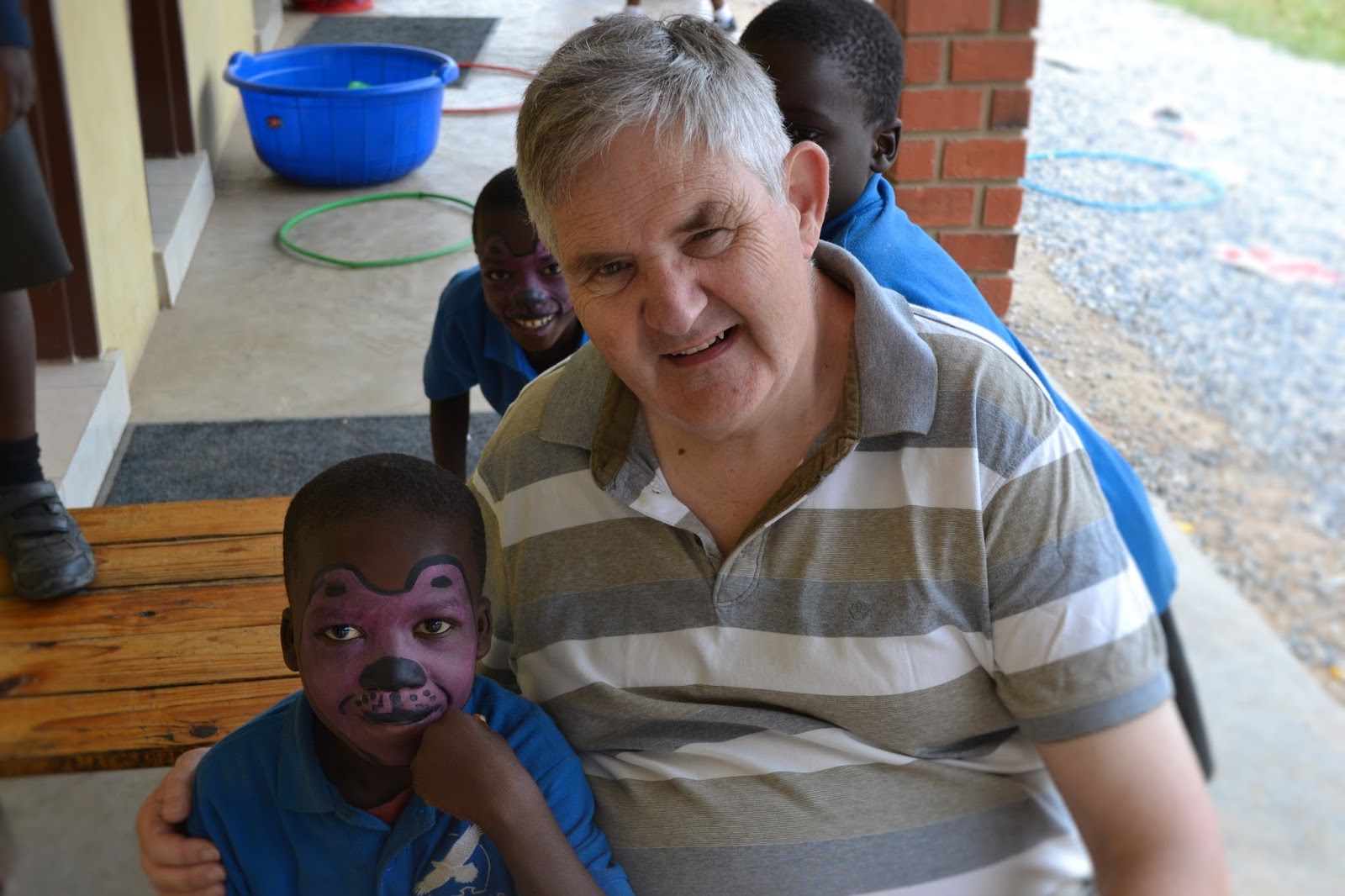
Guest Blog - My Dad's Return to Zambia

Last year my Dad came out to visit me in Kaniki. He recently returned, just over a year later. I asked him to write about his experience of visiting for a second time.

Dad meeting his sponsor child
It has been just over a year since I first visited Ellie in Zambia. I recently returned with my wife Helen and had the opportunity to see how things are going at Kapumpe Christian Primary School and the Arise project. I have been very impressed with what Ellie and the team have achieved over the past year and thought I would share my observations.

The school
Last year there were just two classes (Grades 1 & 2) at Kapumpe. There has since been the addition of a pre-school and Grade 3, and the school has a total of 92 pupils. Unsurprisingly the school seems noisier with the number of children having doubled since I was last there. Almost half of them are supported by the Arise project which works with orphans, vulnerable children and their guardians in the community.

Breakfast is now in two sittings
Many of the children who have recently joined the school are new to playing with toys, writing and playing games. They really enjoy wearing a school uniform and going to school. The pre-school children are beginning to understand English so that when they move into Grade 1 they will be more equipped for learning.

Grade 2 school trip
The staff
The number of staff has also grown and it was good to see more Zambians working at Kapumpe; two teachers, a classroom assistant and a recently qualified teacher. Ellie and Rosie have been joined by Naomi who is an experienced teacher from the UK and teaches Grade 3. The staff recently said goodbye to Tim and Gemma Mills, who set up the school and have now returned to live in the UK.

Grade 3 and their teachers, Naomi and Bright

Child sponsorship
In the last few months a child sponsorship scheme has been set up, allowing more children in the Arise project to be able to attend school. The sponsorship scheme pays for school fees, uniform and stationery for each child, as well as supporting their guardians in specific times of need.

Ellie with one of the new Arise pre-schoolers

Food shortage
‘Mealie meal’ (maize) is the main ingredient for Zambian cooking. Due to the recent poor harvest, there is a restriction on the amount that people can buy from the local shops. The price of food has increased in the last year and the media have reported that it is likely to rise again. There is no benefit system for the vulnerable and little work available other than occasional ‘piece work’ (manual labour). Some Zambians have even been trying to sell bags of mealie meal at hugely inflated prices across the border with the Congo, which has resulted in an increased number of police roadblocks.

Even the dog likes mealie meal!
The Kwacha (Zambian currency)
To make matters worse, the exchange rate has fallen from K10 to the pound, to K16 to the pound within the last year. This means that any imported goods from other countries can be up to 50% more expensive simply because of this fluctuation.

Electricity
During my visit last year I experienced a few random power cuts, but this year there is a schedule in place for load shedding. This means that for eight hours a day, six days a week, there is no power. This also means no water in some places such as Kaniki where Ellie and the team live.

And finally…
Despite all of these changes in a year, there are also some things which haven’t changed. This includes the friendliness of the Zambian people, the colourful clothes that they wear and the stunning African sunsets. I thoroughly enjoyed my return to this beautiful country.

Friendly faces

As I reflect on my second trip to Zambia, I’d like to mention the comments made to me by Mr Kasonde, an ex-policeman and father of one of the Kapumpe pupils who also drives many of the schoolchildren to and from school in his truck each day. He told me that he is so grateful for the school, the people who work there and the work they are doing in the community. He said he can tell that the education the children are receiving is far better than that of any children in the local area. He is so delighted with the difference this is making and the opportunities it provides for the children. When someone like this says ‘thank you’ it makes things even more worthwhile.  

A lift home with Mr Kasonde

Friday, 8 April 2016

Guest Blog - Mum's First African Adventure

This week my parents have been visiting from the UK. My Dad came to see me in Kaniki last year and wrote a blog post so this year it's my Mum's turn...

At long last I have taken the plunge and travelled to Africa for the first time to visit Ellie in Zambia. Rhi is also here for five months so we have taken the opportunity to have a family holiday for the second week when Rach flies to Livingstone and we will all visit Zimbabwe and Victoria Falls.

Ellie and Rhi with some of the children from Kapumpe

We've spent our first week in Kaniki where we have been able to experience life at Kapumpe School and the Arise project. Having read Ellie’s blogs, it has proved to be just how I imagined. I thought I would mention a few experiences that we've had since being here:

The first one was being driven, thankfully in a 4x4, along the pothole-filled roads to Kaniki Bible School where Kapumpe is situated. I'm told that Zambians drive on the left but it is mainly a case of trying to avoid the potholes which are often not seen until you are nearly in them! I must say that I am very impressed with Ellie, Rosie and Rhi’s driving skills.

One of the many potholes

It has been great to be able to spend time at Kapumpe School, meeting the staff and children who obviously enjoy being there. There is a mix of Zambian and Muzunga (white) teachers who have the challenge of teaching in both English and Bemba, the local language. Ellie gave me the opportunity to help some of the pupils with a phonics lesson which was an experience! Bryan spent one of the mornings here taking photos of each pupil so that we can send them copies at a later date as they have never had photos of themselves.

At the end of each school day a large number of children are taken home by truck – I'm not sure how many managed to fit in but they obviously enjoyed it!


The school bus!

We also accompanied Ellie and Lister on Arise visits, which took us along long dusty roads (with even bigger potholes!) into the heart of Kaniki, to meet some of the guardians in their homes. As Ellie has previously reported, the guardians are so welcoming and were very pleased to see us. We were able to give them some fruit and vegetables that we had bought at a local stall on the roadside.

Fruit and veg stall

One of the homes we visited was the home of the child who I sponsor. He lives with his brother and his grandparents who are his guardians, although his grandmother has had a stroke so they really appreciate the support they get from Arise.


Meeting my sponsor child and his family

The Arise office, which is located next to the school office, is open a few times each week. Guardians can come to collect mealie meal (maize), sugar, salt, soap and/or other items that they need. A lady called Lister works for Arise and is such an asset to the work they do, accompanying staff on visits and communicating with the local people in their own language. She is well respected in the community and often people will call on her for help and advice.

Lister and Ellie

Cooking the nshima
On Tuesday afternoon the school had a meal of nshima with the guardians, to say goodbye to Gemma and Tim who have been working at Kaniki for a number of years and are now moving back home to the UK. Nshima is made with mealie meal and is the staple dish here. We ate it Zambian style by rolling it into small balls with our hand, which can be difficult as it is quite hot, although this doesn't seem to bother the Zambians. You certainly need some muscles to make large quantities of it!


The farewell gathering for Tim and Gemma

As Ellie has already reported, there are regular power cuts here which have fortunately kept to the timetable this week (either 5am - 1pm or 1pm - 9pm). We had dinner by candlelight on Wednesday evening before speaking to Rach and Alison (my sister) on Skype to catch up. I very much appreciate the technology we have which lets us keep in touch so easily. 

It is certainly good to experience first-hand what is happening here and see how Ellie, Rosie, Naomi and the other staff are enabling and encouraging the Zambians they work with, as hopefully, in the long term, they are the people who will be running things here.

I am now looking forward to relaxing and enjoying my holiday next week!

Friday, 1 April 2016

The Foundations for Farming project

I know almost nothing about farming, yet it is one of the most common ways of earning a living here in Zambia. The majority of the guardians supported by Arise grow maize; some to sell but mostly just to feed their families. Last year when we visited the guardians in the community, many of their stories were the same – their maize was not growing well and they didn’t expect a good harvest or much food for their families.

Maize growing near to where we live

There were some good reasons for this. The rains were late or didn’t come at all. The government were late in providing fertiliser for those who bought into the scheme, or the farmers couldn’t afford fertiliser at all. However, in some places including Baluba Farm across the road from the compound we live in here in Kaniki, maize did seem to grow well.

Most of the maize grown is made into mealie meal, a staple food here in Zambia

Traditional Zambian farming methods include slash and burn which involves clearing plots of land, allowing the debris to dry and later burn. It takes less manpower to clear the field but is also environmentally damaging. These methods are so ingrained in the culture that people are very reluctant to change and often revert to these more familiar methods even when they are taught different ones.

Foundations for Farming (also known as Farming God’s Way) is an initiative run by The Dawn Community Care Trust, a charity based in Ndola. The aim of Foundations for Farming is to transform individuals and communities through more productive use of land. The methods include digging small basins rather than ploughing the soil, using mulch covers instead of burning the land and rotating crops to promote nutrient rich soil. These methods have been very successful in seeing crop yields increase.


Measuring the basins
Small basins

Foundations for Farming teaches people how to apply biblical principles – planting on time, doing things to a high standard without wasting resources and being faithful with what God has given them, no matter how small that amount may be. I visited The Dawn Community Care Trust to learn from them, and of course ask lots of questions given my lack of farming knowledge! We arranged for one of their trainers to come to Kaniki one morning a week to teach some of the guardians supported by Arise. The Trust advised us to start small, use a small plot of land and choose just a few guardians to participate in the project. It was important that the size of the plot was manageable in order to see good results.


The training in action

We thought carefully about which guardians to invite to take part, and asked three ladies who seem motivated to get things done and who also seem to have influence with other guardians in the community. The majority of our guardians are female and it is often women who work on the fields here. All three of the ladies we invited were keen to participate and turned up keen to learn at the first training session the next morning.

Planting

Watering

Adding fertiliser
I was hoping to get involved with the actual farming so that I could learn a bit more about the project. This didn’t end up happening as on the first morning of training I had to cover teaching a class at school. This actually worked out well as it meant the trainer could teach in Bemba, the local language, which made it easier for the guardians to understand. We have also involved our Zambian volunteer who works with Arise and the two manual workers at school in the project. They and the three guardians who we train will be the best people to teach other guardians in the future. Our hope is that the project will continue to grow and enable many more local people to learn new skills and better support their families.

Monday, 28 March 2016

Happy Easter from Kapumpe

At school this week the children at Kapumpe learned about Palm Sunday, Maundy Thursday, Good Friday and Easter Sunday. As it is a Christian school, we were able to openly talk about Jesus, his death and resurrection.

In our Monday morning assemblies, we usually tell a story from the Bible and involve some of the children in acting it out. This week some of them helped to act out the events leading up to Easter.
The crowd (Pre-School) waving leaves as Jesus entered Jerusalem

Jesus having the passover meal with his disciples

Jesus praying in the garden of Gethsemane

An angel at the tomb telling Mary that Jesus had risen

Pre-School and Grade 1 eagerly watching the assembly

Young children require lots of repetition to help them learn, even more so when English is their second language. This meant that Grade 1 re-read the story in their class with translation. In Grade 2, the class discussed the Easter story and tried acting it out to re-tell it themselves.

The Grade 2 teacher re-reading the Easter story

Grade 3 enjoyed making Easter gardens and were able to talk about the different features and what they represented within the garden of Gethsemane.

Planting seeds in the garden

Arranging features of the garden

Watering the garden

Easter gardens made by Grade 3

We have enjoyed the long weekend but have two more weeks of term to go before the end of Term 1. Wishing you all a very HAPPY EASTER from all the staff and children at Kapumpe Christian Primary School!