Sunday, 5 March 2017

Life Experiences

One of the things I love being able to do here in Zambia is create opportunities that allow the children to do things they have never done before. There was much excitement when we took groups of children from Kapumpe to the swimming pool. They had been looking forward to it ever since it was first mentioned, and would ask every day when they could go next. Two years on from a school trip to a game park, they still talk about the animals they saw and ask if we can visit again. It is lovely to see the look of delight on their faces; I can’t help but thoroughly enjoy the experiences too because of their reactions. 


                            School trip to Nsobe Game Park


Last week was half term for schools in Hampshire, where I used to teach back home. Many children who attend those schools will very likely have been on outings – perhaps to a farm, theme park, the beach (maybe not quite so likely in February!), to visit friends in a different city or possibly even travel to another country on holiday. In contrast, the children supported by the Arise Project tend not to have many opportunities to venture far from where they live, apart from occasionally going to stay with a relative. It is actually rare for the majority of these children to even go to Ndola, the nearest town which is 15km away.


Tasting ice cream on a school trip into town

A group of boys from Arise had a very exciting, new experience last week – they played in a football tournament at the big football stadium in Ndola. The tournament was organised by a charity that we often link up with, Beyond Ourselves Zambia (BOZ), which is a UK-based charity working here in Zambia with community schools in Kitwe and Ndola. BOZ invited ten schools and youth projects to each bring a team of ten boys to the tournament for seven-a-side football matches.

First Arise game at the tournament

Games were played in front of the stadium

We provided our team from Arise with a fantastic Southampton Football Club kit which they were absolutely delighted with, especially when they found out they could keep it! (A few of them even changed into it again straight after school the next day.) A parent from one of the schools I used to work at in Hampshire had kindly donated the kit on behalf of the club. We just had to find trainers for a few of the boys who didn’t own any themselves, although some of the other teams played barefoot.

Arise football team in Southampton kit

Most of the players on the other teams were somewhat older and bigger than our team which gave us a bit of a disadvantage, but it didn’t stop the Arise team from giving their best in each match. It was a bright sunny day, so it was extremely hot and sweaty for them running about all over the place. They lost their first game but drew the next two games and managed to win one 2-0. There were some amusing celebrations when they scored, with a couple of the players doing multiple backflips and our Zambian adult helpers running around on the pitch. I felt like a proud mum (and very British!) standing on the side line cheering them on.

Backflip in action
  
The boys were then invited to have a tour of the stadium. I’ve been to the stadium several times to watch Zambia or the local team play, but for them the walk into and around the stadium was filled with numerous new experiences. In the posh changing rooms, they wanted to wash their hands with the liquid soap, in the VIP lounge they skidded around on the thick carpet and all of them were eager to have numerous photos taken. Even going in the lift was fun, and I found it entertaining that one of boys who tends to have a bit of attitude at school, was a bit scared of this new experience and held on very tightly to my arm!

In the stadium changing room
 
View of the pitch from the VIP Box

Levy Mwanawasa football stadium is named after the third President of Zambia who served from 2002 until his death in 2008. It was opened in 2012 and has a capacity of 49,800. Probably the biggest highlight of the day for the boys (apart from lunch which seems to be a highlight of any school trip for children both here and back home in the UK!) was playing on the pitch inside the stadium during the afternoon. 


Playing on the pitch inside the stadium
  
A huge thank you to BOZ for organising such a great day and to Southampton Football Club for supplying our kit. The children in  Arise are very much hoping this might turn into an annual event. All the work and organisation put in to the day was definitely worth it for the smiles on the boys’ faces.

Thank you from Arise!

Monday, 20 February 2017

Microloans - a new venture for Arise

Employment opportunities are hugely lacking in Kaniki. The Bible College and Baluba Farm employ a small number of people from the local community, and there are also some smaller farms, shops and stalls. Apart from this, it is very difficult for people to find regular work. For the majority, 'piece work' (occasional manual labour) is their only way of making money, which will earn them the equivalent of £2 or £2.50 for a full day’s labour.

Many Zambians rely on small-scale subsistence farming

Many people in Zambia are very resourceful. It is quite impressive to see how many sacks of charcoal can actually be transported on one bicycle! Some people in the villages make and sell fritters, or collect grass to sell to be used in building roofs, but it’s quite a challenge for anyone to start a business up without any capital behind them. In addition, many of the guardians in Arise are uneducated and so they don’t have many of the necessary skills to run a successful business.

Transporting charcoal

For some years now, a UK-based Christian charity called three:eighteen have supported our work at Kapumpe and Arise. They have helped sponsor some of the school children and teachers and fund an annual youth camp. Three:eighteen specialise in microfinance projects. They provide microloans and business training, to enable groups of people in impoverished communities to start small businesses. They first started the microloan project in Chinsali in the Muchinga Province of Zambia in 2012. Since then, three:eighteen have supported over 40 groups in starting small businesses. They also currently employ two Zambian trainers to run the work on the ground.

three:eighteen website

During the last year or so, we as the Arise team have been discussing ideas with three:eighteen and planning how we might start such a project in Kaniki. It was launched this January. There has been a lot of interest from our Arise guardians and all six of the people we approached to be part of the first group, eagerly accepted the opportunity.

One of three:eighteen’s trainers kindly came from Chinsali to spend some time training up a local Zambian who runs his own business here, who would then become the trainer in Kaniki. Together they spent two days with our first group of Arise guardians delivering training and supporting them to write a business plan.

three:eighteen microloan trainers

Two days later the plan was complete and ready to be submitted to three:eighteen for approval. The group have opted for a business selling chickens. We were really impressed with how the group worked together. We had been concerned about some of their levels of illiteracy, but the benefit of working as a group means that they can all contribute different skills and work together to support each other. They aptly named their group, ‘Twikatene’ which means ‘Let’s hold hands together’.


Business training in action

We are looking forward to seeing how the Twikatene group gets on and for how the microfinance project might grow to equip other groups in the future. Please pray for this group - that they would work hard and continue to work well together, overcome obstacles and for the business to grow.

Twikatene Group

You can find out more about microloans and small businesses in Zambia on the three:eighteen website website. If you are interested in supporting some of the costs associated with training more locals, follow the link below and select the 'microloan' option:


Thank you for your ongoing interest and support.

Thursday, 9 February 2017

Bit by Bit

‘Panono panono’ is an expression commonly used in Bemba, which is the local language in this part of Zambia. It means ‘bit by bit’. So when I’m struggling to communicate with someone who doesn’t speak English, I’ll often say “Icibemba panono panono” which means 'I only know a little bit of Bemba'. The Bemba vocabulary is much smaller than English so this expression can also be used to mean ‘slowly slowly'.

With a friend who was teaching me new Bemba words

To me, 'panono panono’ is a very apt Zambian expression. Most things seem to happen slowly here. I have learned to appreciate that long-term development means VERY 
long-term. Working at schools in the UK, if I asked a teacher to change their lesson plans in a particular way, I would expect the way they worked to change right away following the conversation. That’s just not how things work here. Things move and change more gradually, which is a challenge when you’ve grown up in a fast paced, convenience-led culture. Although it does mean that Zambians tend to be a lot more patient than us Brits.

A place where things tend to move very slowly

One of the lovely grandmothers supported by Arise recently came to see us and let us know that her house had collapsed. She lives in Kanfinsa, a rural area about 9km from Kaniki. My colleague Naomi went to see the house and found that there was a whole wall missing, as well as a large crack running through one of the other walls. Unfortunately the heavy rains we have been experiencing, which have been desperately needed for the crops to grow, have caused extensive damage. The family were using a big piece of plastic sheeting to try and keep the rain out, but this was not proving very effective which meant the lady's bed was getting extremely wet from the rain.

Where the wall has collapsed

Another damaged wall

This particular grandmother is the guardian of five 'double orphans' (which means they have each lost both parents). Looking at the photos Naomi had taken, my initial thought was that the house needed to be demolished and built again from scratch to give the family a decent standard of living. But I knew better than to suggest this. As a visitor here it can be tempting to think we know better because we are used to a much higher standard of living, but what is acceptable or expected here is very different to what I am used to back home in the UK. 


The guardian with the youngest child she looks after

Naomi decided to ask the local pastor what we could do to help. It's not a good time to buy bricks here at the moment as it’s more difficult for people to make them and transport them during the rainy season. So the pastor’s advice was to find a temporary solution until bricks are easier to source and the house can be properly repaired. I can't imagine having to sleep in a house that lets the rain in so badly. When it rains in Zambia, it really pours. Nevertheless, the pastor kindly offered to find someone who could temporarily fix the house, using tree branches and mud to pack up the gap from the missing wall, fill in the crack and nail the roof down to prevent leaks. The local Zambians are really the best people to suggest appropriate solutions for a problem like this.

The pastor, his wife and some of their children

Bit by bit the house will be repaired, although at first only temporarily. This is one of the many types of situation that Arise is able to fund from the donations we receive. The immediate work will cost about £20, which would be unaffordable for this lady who doesn't have an income and has five children to feed. Generally Arise doesn't help the people we support pay their rent because we do not want to encourage dependency, but during the rainy season we will often help vulnerable families with roof repairs.

A typical grass roof

This story gives you another glimpse into a very different life to ours. There is no question that wherever we are, we all face different struggles and sometimes we have to accept that things will only change bit by bit. Arise is making a difference 'panono panono' by helping the very vulnerable but wonderful people that it supports. Thank you for your support for our work.

Sunday, 5 February 2017

Operation Christmas Bucket 2016: Thank You!

In December, Arise ran their second annual Christmas Bucket Appeal. This year we hoped the Appeal would be able to bless every single family (almost 90 in total!) supported by the project with a gift of essential food and household items stored in a bucket which could then be re-used to collect water.

Some of Arise the guardians with their Christmas gifts

Thanks to the help of everyone who donated to the Appeal, we achieved our target of £700. This enabled us to buy the buckets, their contents and even covered the petrol needed for several trips in to town to buy the items.

Boxes bought from town

Buckets being filled

Naomi with the buckets ready to go

Arise staff Naomi, Agnes and Lister did a great job of purchasing and distributing all of the buckets whilst I was back home in the UK for Christmas. This was quite a mission to organise as some of our Arise families live in rather rural and remote places.

The pastor in Kanfinsa helped to deliver them in his community
 
Once the buckets were filled, the team spent the time that we would usually spend visiting individual homes in the community, gathering together small groups of guardians to give the buckets to. Every single one of our guardians was really pleased to receive their gift. It was a pleasure to be able to bless them in this way at Christmas time and to remind them of the good news of Jesus.  

A family happy to receive a bucket

On behalf of all the families in the Arise project, a very heartfelt thank you for your support which made this possible.

One of the grateful Arise guardians

Thursday, 2 February 2017

Pondering Privilege and Responsibility

I am really encouraged by the interest that people show in the work that I’m doing in Zambia and I love sharing about it. A common reaction is, “That’s great, but I couldn't do that!” However I believe that if I - whose concerns included whether I would be able to bring my hair straighteners and who didn’t own a torch or anything remotely practical - can, then many people could! However, I also understand that coming to volunteer long-term in a country like Zambia is not for everyone and that's not necessarily a bad thing.

One of my reasons for saying I don't believe that this is for everyone is because I believe the main focus needs to be working with local Zambians - providing training and developing their skills for the longer term future of the country, rather than getting lots of people to move out here and take their potential roles.


Educating parents
  
Also many people in the UK and other developed countries play a vital role in helping fund such work. Many people from the UK support me either financially and/or in prayer so that I can live and work here (a big shout out goes out to Winchester Hope Church and my family and friends. Thank you!). We also have people contributing financially to the work of Kapumpe and Arise which has enabled these projects to grow. Some people are also giving things like their time and skills or do other things to support me; so it may not always be financial. People play their part in different ways. The Bible says that ‘In his grace, God has given us different gifts for doing certain things well…If your gift is to encourage others, be encouraging. If it is giving, give generously. If God has given you leadership ability, take the responsibility seriously. And if you have a gift for showing kindness to others, do it gladly.’ (Romans 12:6-8 NLT). I am very grateful for lots of different people.


Raising money for Arise at Hope Church Winchester

We are extremely privileged in the UK compared to many other places in the world. To have a good standard of free education, free healthcare as well as a social welfare system means we have many advantages that people in a lot of other countries don’t have access to. Like anyone, I find it very easy to compare myself with people around me and forget how most of the world live. But actually, like many of my peers I was able to attend school, sixth form college and university. I’ve also been able to travel abroad to lots of different places, and these are opportunities that many people here in Zambia could only dream of.


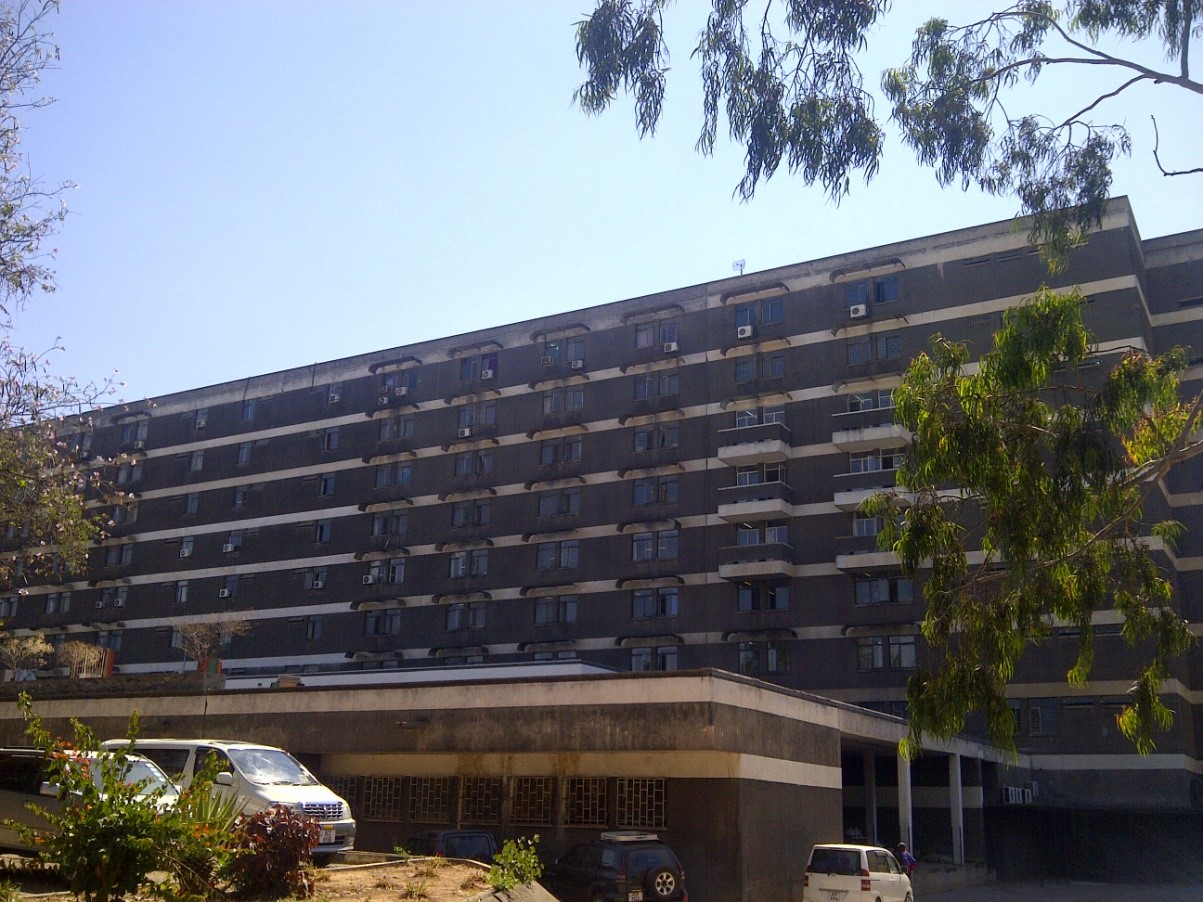
Ndola Central Hospital

In Uncle Ben’s words of wisdom to Peter Parker in Spiderman: “With great power comes great responsibility.” I'd agree that along with the privilege we have, there is also a responsibility to use what we have wisely and for the benefit of others, not just ourselves.

My longer term plan is to return to the UK and hand over some of the work here to local Zambians who share our vision and are invested in the ongoing work. In some ways they are actually the best people to help other Zambians, because of their cultural understanding. 


One of our Zambian staff helps to run our farming project

Living in Kaniki makes me very aware of the opportunities I have, because I see need all around us on a daily basis. The personal challenge for me is to remember this once I’m back in the UK and to put in to action what I’ve learned during my time here. I want to make sure that I give from what I have in a way that helps empower other people who don't have such opportunities. As Gandhi said, "Live simply so that others can simply live".


Wednesday, 25 January 2017

Culture Shock

I recently had the opportunity to spend a couple of days in Dubai en route back to Zambia from my Christmas break in the UK. I was visiting a friend of mine who moved there last year; and it was a good way of breaking up the long journey. My friend Lisa was a fabulous host; there was a glass of champagne waiting for me on arrival and chocolates on my pillow!


Sunny Dubai

Exploring Dubai

We spent the first day at a luxury beach resort. We swam in the sea and the pool, drank cocktails and rode a pedalo. Later on we wandered through The Dubai Mall which is the largest shopping mall in the world. Amongst other things it contains one of the largest suspended aquariums. Dubai certainly is extravagant! In the evening we went to see the Burj Kahlifa, the tallest building in the world with dancing fountains that move to music.

At the aquarium at Dubai Mall

The Burj Kahlifa

On my second day I explored Old Dubai on my own. I went to the Cultural Centre for a traditional Dubai brunch and fascinating introduction to Arab culture. I visited the Dubai Museum, and went in an 'abra', a traditional wooden boat, to cross Dubai Creek so I could visit the souks (traditional Middle Eastern bazaars).

A traditional Dubai brunch at the Cultural Centre

Abra boats crossing Dubai Creek

Contrasting Locations

Dubai is glitzy and glamorous, and is a real contrast from Zambia. The landscapes are almost polar opposite. Dubai portrays a stylish 'cityscape' scene with skyscrapers that light up at night, man-made beaches and huge numbers of hotels lining the coast. Zambia’s natural beauty is much more rural. It is a landlocked country, mostly high plateau with rugged terrain and diverse wildlife. Both Dubai and Zambia boast tropical climates but because Dubai lies within the Arabian Desert, it is hotter and drier. Zambia is wetter, with its rainy season lasting for almost half of the year.

Dubai in the evening
Landscape in Zambia

Dubai and Zambia also look vastly different because of their levels of wealth. As a visitor you can see that the typical lifestyle in Dubai is more upmarket, whereas poverty in Zambia is more visible. Personally I don’t believe that wealth can buy happiness. Whilst I enjoy nice things and enjoy going to nice places, surface level wealth itself doesn’t particularly impress or depress me either way. 

Dubai Marina

Rural life in Zambia

People and Culture

It's actually the subject of people and culture that intrigues me far more. What I do find interesting are some of the cultural differences between Dubai, Zambia and the UK.

An example of this is attitudes towards different races and skin colours. In Zambia, white people really stick out. They are frequently referred to as a ‘muzungu’ (white person) and assumed to be extremely wealthy. There is a greater variety of people from different countries living in Dubai but I found they can also be treated differently according to their nationality. Apparently Emiratis (citizens of the United Arab Emirates, which includes Dubai) are given preference and it is sometimes overlooked if they break strict cultural rules. Although poverty might not be evident to tourists, many Africans, lower class Indians and Filipinos actually live in Dubai's labour camps with very basic accommodation, food and low pay.

Spot the muzungu

Whilst I know that sadly some racism also exists in the UK, I think the majority of people there would challenge this thinking. Overall, the UK promotes positive attitudes towards other cultures. 

The people I met in Dubai were very welcoming and Dubai has good relationships with the other emirates in the UAE. Similarly, Zambians tend to be hospitable and have a strong sense of community. In both Dubai and Zambia, people tend to be more expressive and vocal about their religion compared to many people in the UK. Dubai is predominantly Muslim, evidenced by the number of women wearing burkhas and men in traditional dress. Zambia is very open about being a Christian nation and most people who live there attend or are associated with a church.

Traditional dress in Dubai
A very friendly welcome at a church in Zambia

Culture Differences

Living in or visiting other cultures can make people realise the strengths and weaknesses of their own. But it has also given me a fondness for my own familiar British culture because my understanding of it is much deeper. I ‘get it’. 

That said, everyone is different and life would be boring if we were all exactly the same. Surely the variety of cultures and races that exist make the world a richer place for it. 

Tuesday, 10 January 2017

Arise & Kapumpe Newsletter - Term 3 2016

The academic year in Zambia runs from January to December, so the end of 2016 also marked the end of the school year at Kapumpe.

The final term of 2016 was another key time of growth and development for both Kapumpe Christian Primary School and the Arise Orphan Project. You can find out more about what we've been up to in the newsletter below.

Kapumpe teaching staff 2016

The Arise farming project is going well

Me with one of the Kapumpe pupils sponsored through Arise

Pre-School Class 2016


Grade 1 Class 2016


Grade 2 Class 2016


Grade 3 Class 2016
Click here to open the Term 3 Newsletter page 1, page 2 and page 3


Thank you very much for your interest, support and encouragement. As well as God's provision, we are very grateful for your support throughout the year. It is greatly appreciated.