Thursday, 18 August 2016

Zambian Election Fever

Thursday 11th August marked an important day in Zambia as the country went to the polls to elect a new President and government. Zambia is led by a President and a government which are elected every five years. Elections are decided by a ‘first past the post’ system like in the UK, although for the first time this year a candidate had to win more than 50% to avoid a run-off.

In Zambia there have been six presidents since 1964 when the country gained independence. In 2014, President Michael Sata sadly died during his presidency, so extra elections were held in January 2015. This resulted in President Edgar Lungu being elected to complete his predecessor’s term of office.

PF Candidate Lungu

This year, it was expected to be a tight race between President Lungu of the Patriotic Front (PF) and Hakainde Hichilema (known as HH), representing the United Party for National Development (UPND).

UPND Candidate HH

Zambia has been awash with colour in the build up to election day; posters, t-shirts and banners, in green for PF and red for HH. The build-up has been hard to miss and the noise unmistakable! Many vehicles have been driving around carrying supporters and blasting loud music. It’s quite interesting to watch compared to our more traditional, British way of politely arguing or badmouthing other parties. Political paraphernalia in Zambia appears to be mostly billboard posters and articles of clothing, including chitenges (traditional bright fabric that women wear) rather than printed leaflets. The best way to find out information about the election appears to be asking different people what they know and assimilating what you find out.

One of our Arise guardians wearing a PF chitenge 

Adults over 18 are eligible to vote in Zambia if they have an NRC (National Registration Card). Polling stations are open all day and queues are long, which means it can take hours to cast your vote. Each voter was given five ballot papers this year – presidential, parliamentary, mayoral, local government and a referendum. The nearest polling station to us was at the local government primary school and many staff from the Bible College had the day off to enable them to vote wherever they are registered.

A key issue in the election has been Zambia’s struggling economy. Interestingly as the election grew closer, our 8 hour a day load shedding (power cuts) was significantly reduced to only four hours, a few times a week. During election week, there actually seemed to be power all day every day! I’m told that it is due to the President drumming up support from voters. I am slightly concerned what will happen to the power when the election fever has died down.

One of the interesting tactics that the current President has used as part of his campaign, is to grant people free entry to some of Zambia’s football matches. I attended a couple of these matches and I have never seen the 49,800 seater national stadium so full. There were people running to get in, and armed officers at the entrances letting in PF supporters. I couldn’t really imagine the Tories hosting a free football match and not allowing Labour supporters to attend it!

Supporting Zambia Football Team

It is common that people in Zambia vote according to tribal lines. President Lungu is from the Eastern Province which is part of the Bemba region. This mean that PF’s main support comes from the Eastern Province, the capital Lusaka, the Copperbelt (including Ndola) and other Bemba speaking regions.
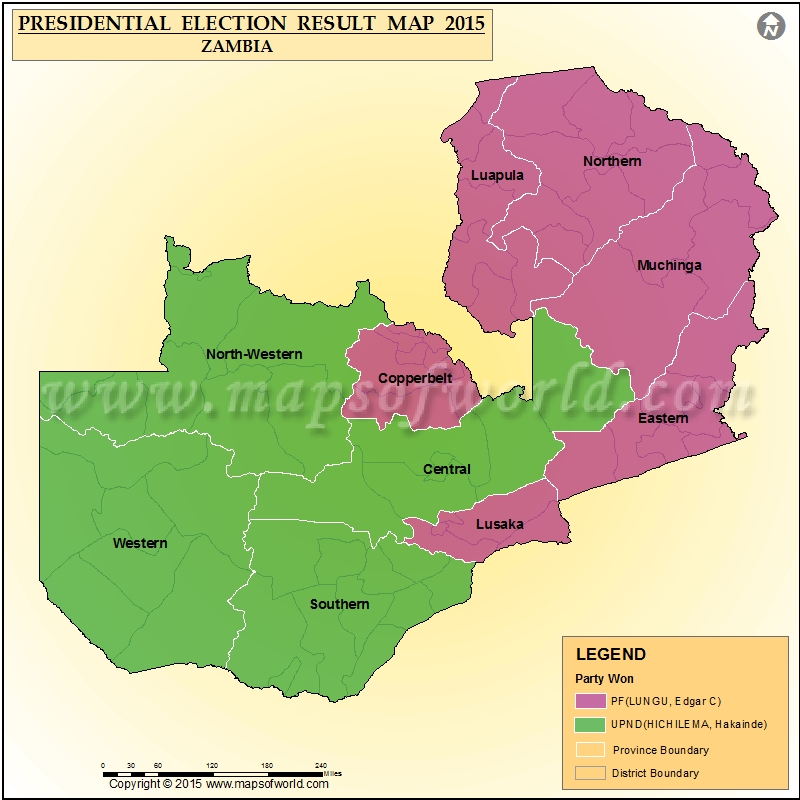
Winning parties in 2015 election

The Electoral Commission of Zambia (ECZ) gradually released the results from each constituency between Friday 12th and Monday 15th August. Where we live in Kaniki it was 600 in favour of PF and 400 for HH. Considering it is predominantly a PF dominated area, the opposition gained a lot of support. Overall, the vote turned out to be close, with Lungu securing 50.35% of the vote and retaining his position as President of the country.

There have been rumours of electoral malpractice, such as missing votes. UPND are alleging fraud, saying that the ECZ colluded with PF to rig the result, so the party has withdrawn from the ballot verification process.

Although mainly peaceful, it has been a tense time in the country. There have been a few reports of trouble even nearby. When driving in to town one evening recently, we went past a couple of open vehicles full of supporters, beeping horns and playing loud music. One of our neighbours told us that two people were killed that evening among the commotion.

Please pray for continuing peace in Zambia.

Raising the Zambian flag at school

Thursday, 11 August 2016

Lovely Lawrence

My sister Rhi is an Occupational Therapist. During her five months here in Kaniki she's been using her skills to help and support a boy that we all love, Lawrence. She's introduced an exercise programme for him and led training for his Dad and the staff at Kapumpe. I asked her to tell you some of his story...

When I look back on my trip to Zambia I will definitely remember Lawrence. Lawrence is 9 years old and in Grade 1 at Kapumpe Christian Primary School. He loves coming to school and I don’t think I have ever seen him without a smile on his face.

Always smiling

Lawrence and his twin were born three months prematurely. They were kept in an incubator at the hospital but sadly his twin died. His dad told me that when the twin died, they discovered the incubator had been too hot so it had to be cooled down before baby Lawrence was put back in. 

In December 2015 Lawrence’s father cycled to Kapumpe Christian Primary School to ask if his son could attend the school. He spoke to Rosie and explained that because Lawrence couldn’t walk, none of the local schools would accept him. Lawrence has cerebral palsy and Ellie and Rosie weren’t sure whether they would be able to support such a physically disabled child whilst the school was still in its early stages, but they went away to discuss it and pray about the situation. As Grade 1 teacher, Rosie felt prompted to welcome him into her class in the new school year. She didn’t know what to expect but trusted that somehow God would enable the school to support him.

Lawrence when he started at school

Lawrence's cerebral palsy mainly affects his legs, which means that if he is sitting at a desk you might not notice any difference between him and the other children in the class. A container of donated items from Denmark arrived in Kaniki in January 2016, which happened to contain a four-wheeled walker. Ellie and Rosie took the walker, hoping that it might be suitable for Lawrence. Rosie encouraged him to use it to try to walk, and soon he was walking around school in his own way, albeit falling over frequently but quickly getting up, smiling and walking on again. 

Lawrence with the four-wheeled walker

When I came out to Zambia in March I brought with me a children’s walking frame which had been kindly donated by a local children’s therapy department. The frame enabled Lawrence to walk in an upright position, and as children’s frames are open at the front he is also able to use it to play football, join in class activities and run up and down the dirt track next to the playground. He is such a bright and friendly boy who absolutely loves learning and playing.

Playing with the parachute alongside his class

Playing ball with his friend

A couple of my friends are paediatric physiotherapists and were kind enough to suggest some exercises that might help Lawrence. We’ve been doing these exercises with him on a daily basis and his posture and flexibility has improved. 

Doing his daily exercises


Lawrence’s Dad recently told the staff how grateful he is for the help and support his son has received at Kapumpe and the positive impact it has had on Lawrence’s life. He reflected on how Lawrence had been unable to walk before January this year and how grateful he is to Rosie and the team for making the bold decision to accept him into the school and giving him the opportunity to walk.

Lawrence lives in a town called Soweto which takes nearly two hours to Kapumpe by bike. His father and brother take turns to bring him to school on the back of their bike each day. They then return at the end of the day to collect him. Lawrence’s father recently shared his concern about Lawrence missing days at school when there is a problem with the bike, which can happen quite frequently due to the local potholed roads.
Getting picked up from school on the bike


A few weeks ago during a staff meeting, I was able to teach the staff about cerebral palsy and the types of challenges that Lawrence faces. Lawrence and I then demonstrated his exercise programme to enable other members of staff to be able to do these with him. We invited his Dad to this meeting and he told us afterwards that he had never been given any information on cerebral palsy before. He informed us that he had taken Lawrence to a number of hospitals when he was younger to ask for help, but was told that they would not give him any exercises until he was 15 years old. 

Lawrence’s Dad also informed us that Lawrence was still unable to walk at home as he did not have shoes to wear or a walking aid to use at home. We provided him with a pair of boots for Lawrence to keep at home and purchased a pair of crutches for him to start practising with at school. Lawrence took to the crutches straight away, although we found that he still needed the frame when playing sport and when he was tired. We were able to get hold of a second pair of crutches from the local hospital and gave these to Lawrence to use at home. 

Lawrence was given advice on using the crutches by one of our teachers


Lawrence loves his new-found freedom and can sometimes be seen running along the path at school with his frame, seeing how fast he can go! At our recent sports day he was so delighted to be able to join in every group activity and to represent his team in the sprint. The other children were very supportive and patient with him, which was great to see.


It has been incredibly humbling to work with such a positive, happy boy and to see the lengths that his family go to in order to support him. It is amazing to see how such small interventions have had such a significant impact on his life and his future. I am so grateful that Rosie was keen to include Lawrence in her class, and both her and our Zambian teacher in Grade 1 continue to ensure he has the support he needs whilst treating him as an equal member of the class.

Being used to working with adults, this has been my first experience of paediatric therapy, and it has definitely been a positive one!


Lawrence is just one of the children who attends Kapumpe Christian Primary School. For more information and updates visit our Facebook page:


* This story has been shared with the permission of Lawrence's family.

Saturday, 6 August 2016

Who’s teaching who?

I’m a teacher by trade and I really enjoy coaching and mentoring others. It has been a really interesting experience to try doing both of these things out here in another culture. It has also convinced me I am learning far more myself here than anything I am passing on.


Staff training day hosted by Kapumpe

This term at Kapumpe we have been looking at how we can make our school more Zambian. I have visited a number of other Zambian schools which has got me thinking about the ways in which we do things and how we make decisions about what is best for the children we teach.


A private school in Ndola

A community school in Kitwe

The easiest way to do something is to do it the way you have always done it. For example, when I started teaching Grade 2 at Kapumpe last year, I set up my classroom in a similar way to how I would in the UK. I used planning formats that I had previously used, and a behaviour system which had been successful back home. Soon after term began, I was asked to mentor a Zambian teacher and share class responsibility with her. This meant that I was able to show her my way of doing things whilst providing encouragement and feedback to broaden and improve her teaching skills.


My grade 2 classroom last year 

On reflection I think that I assumed that I knew how to teach and that I was the one with skills to pass on. Since then however, I have had quite a change of mindset. I’ve learned that a method or strategy that is effective in one environment or culture does not always transfer well to a different context. Our best resource here at Kapumpe Christian Primary School is definitely our Zambian staff. They have a deeper knowledge and understanding of the local children and culture that I will never have. If I were to take on a similar challenge again, I would approach things a different way. First, I would ask about how things are done in Zambia.


One of our members of staff who I have learned a lot from

In my work to develop the school, I have introduced systems that will help us monitor and improve our performance - a school improvement plan, lesson observations and performance management appraisals. Each time I started to introduce one of these systems which I thought might be new and innovative at a staff meeting here, I found that the Zambian teachers were already familiar with it. The process might look different (for example, I’ve heard that lesson observations over here focus on identifying the teacher’s mistakes!), but they are still carried out for similar reasons.

I am confident that some of the teaching strategies we have introduced at Kapumpe have really helped to improve the quality of the education that the children receive. We recently invited parents and guardians to attend a meeting with their child’s class teacher to discuss their progress and see their work – like parent’s evening but in the afternoon. It was lovely to hear so many positive comments. Numerous parents and guardians came to find me so that they could tell me how pleased they were with how their child was getting on. Many of them mentioned that they have noticed a distinct difference between children who attend Kapumpe and others in the community. I myself have noticed this difference in terms of confidence, spoken English and thinking skills.


Looking at children's work before teacher-parent meetings

One area that Zambian schools seem similar to those in the UK is the challenge of government demands. The government expectations for teaching and learning in Zambia are further ahead of where I expected them to be, yet many teachers tell me there is a big focus on statistics. Completing a census form about Kapumpe for the government took us two meetings and several additional hours, yet we’re not sure what the data collected is actually used for. I’ve heard that teachers have to re-write their register every time a new child joins the class (a frequent occurrence here). At many local schools there are over 70 children to a class and most teachers do not have a computer so will write everything by hand.

As a school, we at Kapumpe are very much learning as we grow. It is my hope that next year all our classes will have a Zambian teacher who we can mentor, support and learn from. The different knowledge, skills and experience that each member brings will only make us a stronger, more effective team.


Our current grade 2 teacher

Thursday, 28 July 2016

Masterchef - Zambian Style

I asked my sister, Rhi, to tell you about one of the recent training sessions she led for our Arise guardians.

One of the things I love about being out here is working with the Arise guardians. As Arise has a strong education focus, initially I wasn’t sure that my healthcare background would be relevant and fit with the vision. However I soon discovered that not only is the standard of academic education poor in the local area but so is the level of health awareness. This has meant that I have had the privilege of teaching our Arise guardians how to look after their own health and the health of the children they care for.


One of our guardians with some of the children she cares for

One of the ways I have been able to do this is by educating them on healthier ways to prepare food and what foods are good for us. A typical attribute of cooking in the Zambian culture is overcooking vegetables to ensure that worms, eggs and germs are destroyed. Unfortunately this also means that the nutritional value of the vegetables they eat is significantly reduced, especially as they add a large amount of oil to everything they cook. Washing vegetables with only water as we do in the UK would not be particularly beneficial due to the cleanness of the water available in the local community. Therefore, the first lesson in their ‘healthy food’ session was how to safely and thoroughly wash their vegetables by soaking them in a large bowl of water with a small amount of bleach/chlorine. By soaking the vegetables for ten minutes the unwanted parasites are killed but the nutritional content remains.


Learning a new way to wash vegetables


In Zambia knowledge is power. This means that it is not freely shared and many people are left without knowing basic information about how to stay healthy, and so end up relying on old wives’ tales and traditions passed through the generations. Groups like the 7 Day Adventists who choose to live vegan lifestyles end up teaching people that meat and meat products are bad for them, and without any alternative education this begins to become a widely believed ‘fact’. I was so impressed with the enthusiasm of our lovely guardians to understand how to look after their health and why they should do this. One of them even brought a notebook and our volunteers helped her to write notes!


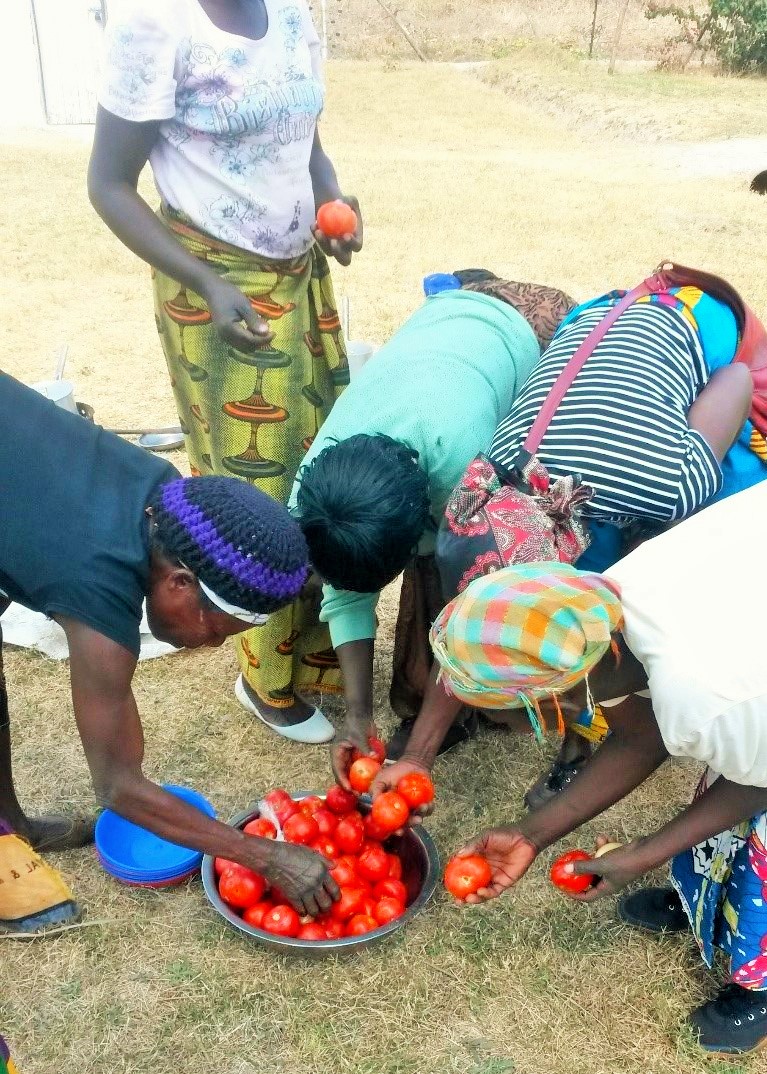
Choosing their vegetables


The next lesson was to understand how using so much oil affects our body and leads to common heart problems such as high blood pressure. Other useful information that we discussed included what common foods are good for us and why eating the right food prepared in the right way is so important. 


Understanding the importance of preparing food in the right way


As all of the guardians had arranged to bring their own braziers and pots, the big highlight of the morning was a competition for who could prepare and cook the vegetables provided in the healthiest and tastiest way. Our two Zambian Arise volunteers and our school cook were asked to be judges and enjoyed sampling all of the vegetables and passing on their feedback. They wrote down their comments and decided on a winner. One of the entertaining factors of the morning for us was how direct the judges were in their feedback. Comments such as “overcooked”, “too much oil” and “too much salt” were freely shared and I found the absence of British manners hilarious!

Practising cooking vegetables with less oil


Presenting food to the tough judges


After the winner was declared and they received a bar of chocolate from the UK for their prize (not quite in keeping with the healthy ethos!) the guardians showed me how to cook their staple Zambian food nshima. They offered for me to try stirring it and I was amazed at how difficult it was and how strong they must be! Needless to say they found my lack of natural ability very amusing. 


Making the nshima

Perhaps the biggest challenge of teaching our guardians about what foods are good for us is the limited types of food that are affordable to them. Meat and other animal products are vital to a healthy diet here, however with limited financial resources these are the first foods to be withdrawn from a meal. As a team we are looking at ways we can support our guardians to include protein in their diet, however the price of these foods is significantly higher than vegetables, rice and mealie meal (to make nshima). One of the other challenges in trying to teach Zambians about healthy food is the difference in what food we are used to cooking and eating. Eggs are the most nutritious food available here, but boiling them is the only method used. I demonstrated how to make scrambled egg, which is an ideal nutritious food for children and those who are sick and struggle to chew.

The morning was a success, with guardians commenting on how much they enjoyed learning about healthy foods and putting this into practice. They were keen to go home to try out what they had learned and will return in two weeks for another go at the cooking contest and to learn more about what foods will help with some of the common health conditions faced in Zambia. The session ended with a chance for all the guardians and a few of the school children to enjoy the fruits of their labour and eat a balanced meal of nshima, eggs and vegetables. It was a wonderful morning with excellent company and a delicious lunch!

Enjoying a tasty lunch

Friday, 22 July 2016

Kwacha Watcher

The Zambian currency is called the kwacha. It is not available outside of Zambia so I had to wait until I arrived here to get cash out. Rather than opening a Zambian bank account which I was told would not be worth the hassle, I just withdraw my money from my English bank account. This has worked out pretty well as the kwacha has plummeted in value whilst I have been living in Zambia.

Ndola supermarket

When I first arrived here the exchange rate was around K10 (10 kwacha) to the pound, which made it easy to compare prices with home. However, at the end of last year the economic crisis caused the kwacha to fall dramatically. Zambia provides 70% of Africa’s total copper market and there was a reduction in the demand, so prices fell. The exchange rate plummeted to K20 to the pound but this year it seems to have stayed somewhere between K13 and K15 to the pound.

Here’s what you can get for your kwatcha here in Ndola…
A pile of 4 tomatoes from roadside stall is K5 or 35p
A 200g bar of Cadburys (vital for my survival!) is K22 or £1.50
A box of cereal K45 or £3.20
Steak at a restaurant K120 or £8.50
50 litres of petrol K500 or £35

Vegetable stall in Kaniki

Food is expensive here in relation to salaries. A 25kg bag of maize meal, which would provide enough nshima for a family of four for a month, costs nearly K100. To put this into perspective, a full-time manual worker might earn around K600 a month. Petrol is cheaper but cars themselves are expensive because they are all imported, and also need repairs more often due to the poor condition of the roads. On the other hand, a cinema ticket in the city of Lusaka costs K50 or £3.50, which is much better than in the UK!

Making the most of the cheaper cinema in Lusaka with Anna

I find it quite amazing that here I can live on such a small amount of money compared to at home. My accommodation here is provided by the Bible college, so the majority of my costs are for food, internet/phone and transport. In some ways, being a volunteer does challenge my way of thinking. We are brought up to work hard in order to provide for our own needs, rather than relying on other people. Living in a country where people depend on each other a lot more and where sharing food or money is part of daily life, reminds me that how we live in the western world is not the only way. In the UK we prepare for the future by saving money or investing. Here, people in the community seem to do that by sharing what they have with others; helping someone when you have a bit extra often means that they will help you if and when the situation is reversed.

Helping each other

People I know in the local community approach me occasionally to ask for a loan. This could be to pay for repairs to their home or for transport to take a sick family member to the clinic. In these situations, it is extremely difficult to know how best to help. With my Western mindset, I wonder whether a loan really helps as it might encourage the borrower to become reliant rather than learning to save money for such situations. However, many people live very ‘hand to mouth’ in the communities we work in. If they earn money it might be enough for food or rent but not necessarily anything else, so perhaps they do need someone to help. I have also noticed that most people here seem to eventually be able to find the money from somewhere. It can be very hard to know what to do so I just try to listen to individual situations and pray for wisdom.

Helping people to help themselves

It is a real privilege to be able to help people in the local community here who are not able to pay for it, although I do feel they are teaching me many different things. It is also amazing to be blessed with enough money to live here, so I am very grateful to my church and other people who support me – thank you. You make the work we are doing possible, which in turn is making a difference to the lives of children and their guardians in Kaniki. 

Thursday, 14 July 2016

Zambia's Natural Beauty

One of the things I love about living in Zambia is the natural beauty that surrounds us here. It helps that most days are bright and sunny, which I think makes everything look a little more glorious. It means we generally spend far more time outside here than in the UK, which lends itself to a more active lifestyle and gives us more time to enjoy the scenery and surroundings.

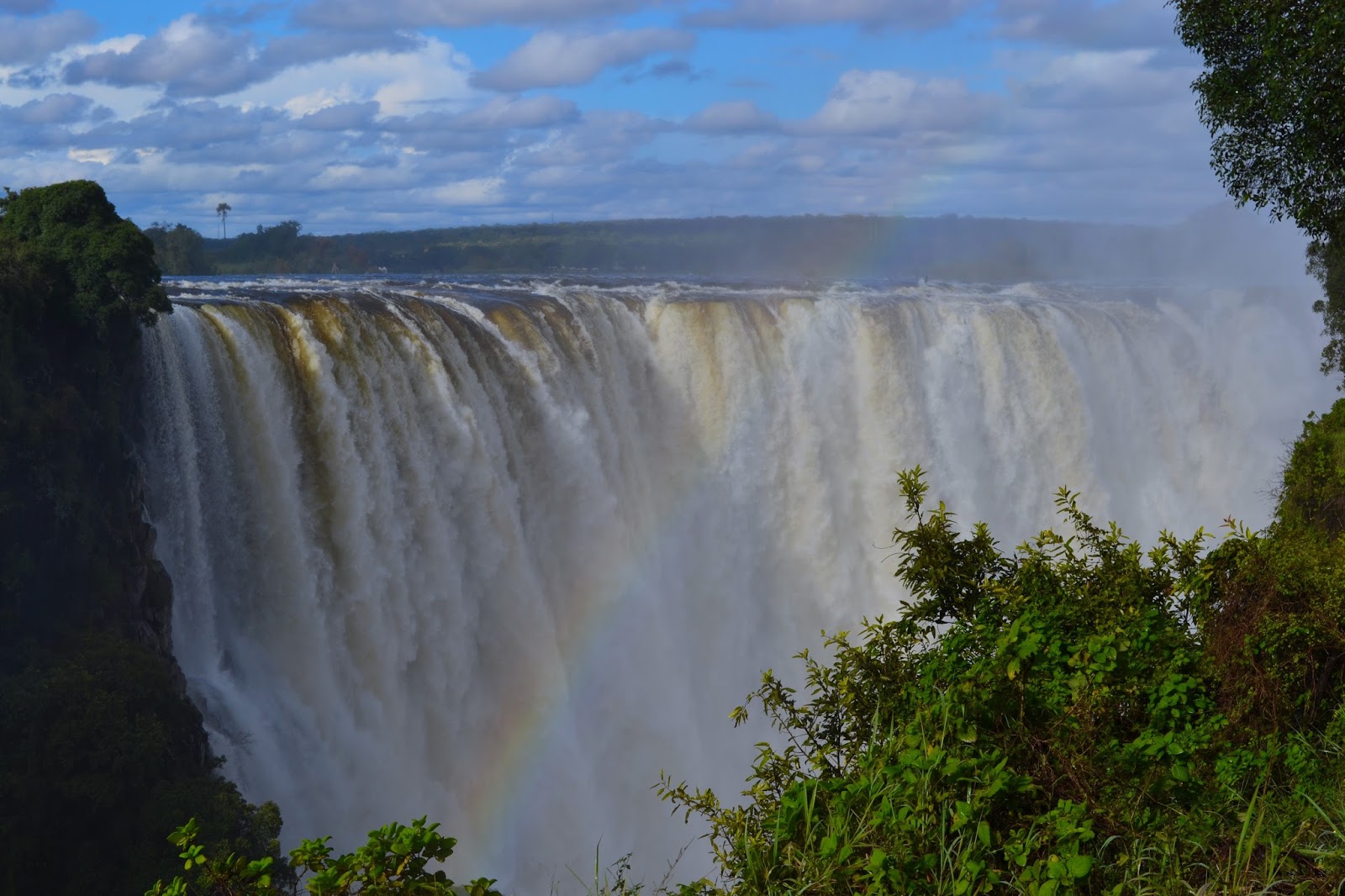
The rainbow at Victoria Falls

All year round the sun sets between 18.00 and 18.30hrs (we work in 24hr clock here) and it is stunning to see. The bright blue sky gradually fills with rich contrasting oranges and pinks. Photos just don't do it justice!

Sunset in the village

Sunset over the Zambezi

The stars are also amazing here in Kaniki. As the sun sets early and there is little light pollution (particularly during the power cuts!) the stars shine brightly against the black night sky. We can even see Mars and the Milky Way.

One of the seven natural wonders of the world can be found in southern Zambia. Victoria Falls is a huge, powerful water fall with incredible views that attracts many visitors. I have visited the Falls twice which I thoroughly enjoyed. Last year I even went up to the top of the Falls where I swam in Angel’s Pool.
  
Victoria Falls

Swimming at the top of the Falls

Zambia also has a number of national parks which are great for spotting wild animals on safari. I’ve heard that Zambia’s best game park is South Luangwa in the west of the country, so I hope to make a visit there later in the year. Nsobe is a very small game park near where we live and is my favourite place to go on a day trip from Kaniki because it’s so peaceful.

On safari

Spotting zebra

Another beautiful location for a day trip from Kaniki is Lake Kashiba, otherwise known as Sunken Lake. It’s a bit like a crater lake and no-one knows exactly how deep it is. Apparently it was formed by water causing the limestone to dissolve and form caves, which eventually collapsed leaving the huge and very deep lake. It is great fun swimming in the lake…apart from one time when I saw a snake swimming in it, a little too close for comfort!

Sunken Lake

It’s amazing to be able to experience so many beautiful sights and sounds whilst living out here. Instead of the English fresh air and green fields, I get to experience a different kind of natural beauty - with lots more sunshine!

Nsobe

Eating breakfast in the sunshine

Sunday, 3 July 2016

Car Trouble

I've had my fair share of car trouble in the UK - a cam belt which broke just out of warranty, a tyre that blew on the motorway, and even being driven into by a lorry on a one-way system! At home, the AA have always come to my rescue but unfortunately in Zambia there's no AA or RAC. The roads are in a much worse condition here so they also cause more damage to vehicles.

We are very fortunate to have had a 4x4 donated to the Arise project. This means that we are able to visit people supported by Arise who live out in the bush. We're also able to use the vehicle for personal use, as long as we pay for the petrol and maintenance. The car is a real blessing because buying a vehicle here would cost a considerable amount of money. It also gives us a bit of independence and stops us feeling claustrophobic or lonely whilst living in the compound in Kaniki.

The Arise vehicle in the workshop

In Zambia it is a legal requirement to carry two warning triangles in your vehicle in case you break down. I have been stopped several times by the police to check this. If people don't have warning triangles, they often lay large branches out in the road instead. This works until someone then forgets to move them and they become an obstruction.

When living here the best thing you can do is to take care of your vehicle and learn the basics of vehicle maintenance. Our friends who live nearby and run a charity called Mechanics for Africa were recently offering a two-day course on vehicle maintenance and basic servicing. My sister Rhi was keen to go and so I somewhat reluctantly agreed to join her.

Rhi the keen bean

It was an excellent course and I would recommend it to anyone living here in Ndola. It pushed me out of my comfort zone because although I usually feel reasonably confident at school or on courses, it was a different kettle of fish when learning about transmission fluid, suspension and differentials. We spent some time in the classroom learning about basic servicing and how things work, and then we had time in the workshop trying it out. We were assured that there was no such thing as a stupid question, although my friend Holly and I may have tested that theory!

Our instructor

Holly in the workshop

Little did I know how useful the first day of the course would prove to be. The course was on Saturday, and on the following Monday Rhi and I discovered we had a flat tyre. We were determined to change the wheel ourselves and although it took a while, we did manage it in the end. Unfortunately my skinny arms didn't quite have the strength needed to remove the nuts from the wheel. Despite being somewhat impractically dressed in a pencil skirt and flip flops, jumping up and down on the lever eventually did the trick.

Changing the tyre

On the second day of the course we learned how to change brake pads and transmission fluid. Although I’m not too sure how many of the advanced skills I will be able to put into practice by myself, the course has been really helpful in teaching me a bit more about what a mechanic might mean when they explain something about the car. Girl power lives on!