Friday, 23 June 2017

Money, possessions and ‘stuff’

Living in Zambia, the supermarket that I most often shopped at was called Shoprite. For some reason, it always has old cheesy songs playing in the background. I heard Chris De Burgh's 'Lady in Red' more times than I care to remember, and Cliff Richard’s ‘Mistletoe and Wine’ often blasted out throughout November and December. During one particular visit towards the end of my time in Zambia, Dido was playing and for some reason the lyrics from that particular song stuck with me.

Ndola supermarket

'Nothing I have is truly mine…' echoed in my head as I drove home.

I thought about this for a moment. I was driving a vehicle that wasn’t mine; it had been donated to Arise. The apartment I lived in wasn’t mine; it was built for the Bible College by volunteers. Obviously I had clothes, food and other things (both useful and useless) stored there but I planned to donate a lot of it when I left Zambia to move back home. After all, it’s just ‘stuff’.

The apartment block where I lived

Living in Zambia as a volunteer has certainly challenged my perspective towards money and possessions. I’m sure this sounds very typical of someone adjusting to life in the UK after spending a length of time in Africa! But it stands out to me because it’s difficult to convey the enormity of the poverty there, compared to our wealth here at home. In the UK, the culture tends to be about working towards owning more and more, and getting bigger and better things. It’s easy to prioritise convenience over cost and treat lots of things like they’re disposable, just because we can buy another one if we need to. I wonder if it’s this kind of thinking that can lead us to feel like we never have enough and even wonder if we will ever be content.


Children in Kaniki

I used to cringe when I would hear children being told, "There are starving children in Africa who would eat that!" in order to make them finish their dinner. It always seemed a silly thing to say because it doesn’t mean that meal would be transported all the way across the globe for someone else to eat it! However I do think that there really is a link between the choices we make and how other people live. It is very easy to waste food and be excessive about what we buy. (Tearfund's 'Renew our Food' campaign is worth reading about in connection with this.) Just by being a bit more conscious about how we spend our money, we can have more left to give away to help others. Thousands of charities like Arise and Kapumpe can use a small amount of money to support people who are much more vulnerable than us, but who we’re unable to directly help ourselves. 

Meal for children in Arise

I used to think that a few small decisions made by one person could not make much of a difference, particularly when we consider the scale of the problem. According to the United Nations Food and Agriculture Organisation there are 795 million people in the world who are suffering from chronic malnourishment. The work that Arise and Kapumpe are doing in Kaniki and the surrounding areas is just a very tiny drop in a massive ocean. For each individual who is helped, there are many more who are not.

But I’ve seen that it still makes a difference to some. You might be aware of the starfish story; this is something that I was reminded of again and again whilst I worked in Zambia. It helped me to focus on what we can do and the people who we can make a small difference to. 


Being financially supported by my kind family, friends and church for more two years whilst I lived in Zambia might have made it easier for me to view money, possessions and stuff differently, as if it were not truly mine. But I don’t think that way of thinking is simply something to apply there. The Bible says that we are enriched in every way so that we can be generous on every occasion (2 Corinthians 9:11). So my challenge is now to work out what that looks like now that I’m back home and living in the UK. 

Sadly as I ponder that, there’ll be no more Cliff and other cheesy songs to sing along to in Sainsbury’s!

Tuesday, 30 May 2017

All change

It's now been a few weeks since I moved back to the UK so I will be posting my final few blog posts that I have written about my experiences. This one shares how I was feeling about leaving Zambia before I moved back…

Saying farewell at Kaniki

I'm not sure if it makes me a bit strange but I quite like change. Not horrendous life-altering difficulties of course, but I believe that lots of changes can be positive and bring about new opportunities.

Moving back to the UK will definitely be a big change for me. Although I’ve been back to visit, it was two and a half years ago since I was settled there and in the few years before that my life had changed a lot as a result of going through a divorce. When people ask how I’m feeling about the move back home, it’s tricky to answer.

Overall I am feeling positive and expecting the transition to be good. I’m also excited about it in fact. I am really looking forward to spending time with lots of friends and family who I have not been able to see much over the last couple of years. I’m looking forward to being part of family celebrations and friends' birthdays and all kinds of other events that I’ve missed. I am also looking forward to living on the same continent as my boyfriend.

Catching up with friends in the UK

I recently watched a movie which was set in London and it reminded me lots of things that I love about British culture and the UK. I’m looking forward to eating good cake and puddings, enjoying light summer evenings and barbecues, sitting in front of a cosy fire when it’s cold, going for walks in the countryside and even having decent WiFi. I am glad there will be less bugs, snakes and power cuts at home. I look forward to the convenience of being able to walk to places or drive on smooth roads, and being able to pop to the shop or order pretty much anything online.

Welcome home cake - my friends know me well!

However, there are numerous things that I will miss about Zambia. Most importantly I will miss the people who have become my friends and I will be particularly sad to leave the wonderful children from Kapumpe and Arise. They are such fun to be around and never fail to bring a smile to my face. I will also hugely miss the constant sunshine, beautiful sunsets, swimming in the outdoor pool, a more relaxed attitude to life, and the friendliness of people who take time to greet you whether they know you or not. I will also miss my little dog who I adopted in Zambia and will have to go to a new owner here when I move home.

With colleagues and friends 

Archie waving goodbye 

I imagine it will feel quite strange not having petrol attendants at petrol stations waiting to fill up the tank for me, or people ready to pack my shopping for me in the supermarket like there are in Zambia. I know I will find it hard to say goodbye to the amazing children and staff I've worked with here, and living so far away whilst knowing some of the challenges they are facing will be hard. But just because something is hard doesn't mean it's not what you should do. Living in Zambia has had many challenges. Life is not as straightforward here, but the initial adventure that has become my normal life has been a wonderful, life-changing experience. 

Some of the lovely children at Kapumpe 

Having thoroughly enjoyed the challenge of working for a charity in Zambia, I’m now looking for a job in the 'third sector' (charity). I’m motivated to try something new, find something I’m passionate about and hopefully use what I’ve learned, to make a difference in a different setting.

When I get home, will things continue as they were? I don’t think so. Hopefully I will follow a different career and I’ll live in a different house, possibly even a different city. But not only that. A friend told me to remember that everyone else’s lives will have moved on as well as mine. Because of this and because my experiences have changed me, things will be different. But change can be good! I have been hugely challenged about my attitude to the poor, to be generous with the resources I have, to consider ethical issues more and about the importance of empowering others. These things will definitely be on my conscience as I settle into another ‘new normal’ life. 

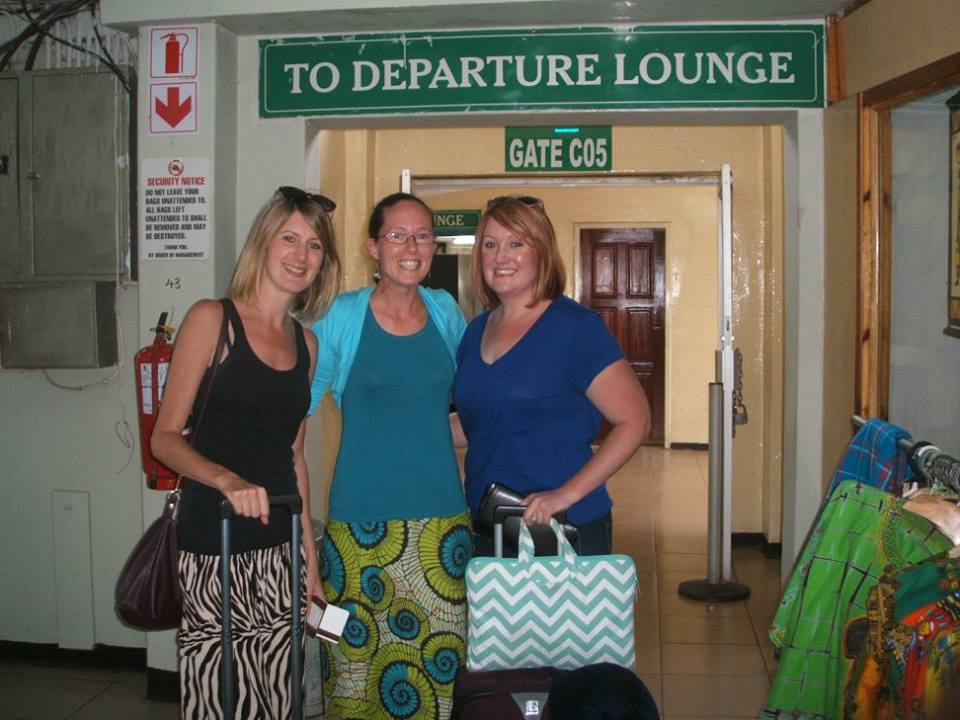
At Ndola airport 

I hope this blog post gives you a flavour of my mixed emotions. Yet I know in it all that God has a purpose for the things he leads us to do. When we look back we often see opportunities that 
particular situations brought about. And just to add word of warning…for those I see when I have moved back home, I may talk a lot as I process my amazing experiences. I hope you will be gracious and allow me to reminisce about Zambia!

As one chapter closes, a new chapter opens. And with every ending there is a new beginning.

Saturday, 6 May 2017

Looking for a sponsor for the lovely Lawrence

My sister Rhi couldn't keep away from Zambia this year either! She made her third trip to Kaniki to spend two weeks with me before we travelled back to the UK together. You may remember that she's an Occupational Therapist so last year spent some time supporting Lawrence, one of the pupils at Kapumpe. Here she provides an update on his progress and explains why we are now hoping to find him a sponsor...


Rhi with Lawrence and some of his friends

Last summer I wrote a blog post about Lawrence, a student at Kapumpe who has cerebral palsy. This year I returned to Kapumpe and met Lawrence again. He is now in Grade 2, running around school confidently on crutches and still as happy as ever. When doing Lawrence’s exercises with him, I noticed that he seemed much stronger and more flexible than he was last year. Lawrence and his father told us that they have been doing the exercises with him at home, and that he has been walking at home with his crutches rather than crawling which is how he had moved around previously.


Confident on crutches

Grade 2 at Kapumpe

When I returned to Kapumpe, his Grade 2 teacher told me that unfortunately Lawrence has missed a significant amount of school due to the weather – the rainy season runs from November to April in Zambia. Last summer Rosie and I visited Lawrence and his family and saw how rural their home is. It helped us to see and understand why any wet weather or problems with their bike prevents Lawrence from attending school. Lawrence is such a happy and motivated student so it’s frustrating to see how these factors impact his education.


Ellie with Lawrence's teacher

Lawrence’s Grade 2 teacher is physically disabled herself, and was supported by Arise to attend a school in town for children with physical disabilities. She has been teaching at Kapumpe since the school began in 2014, and has defied the usual expectations for people with disabilities in her community. This is something we want for Lawrence. After discussing the situation with his teacher and Lawrence’s father, Arise and Kapumpe teams are considering whether this school in town would be more beneficial for Lawrence. He would be able to board at the school and therefore eliminate the problems he has with attendance, and there would be physiotherapy available on site and access to a doctor for any medical issues that may arise.


Lawrence's parents
Unfortunately Lawrence’s family are not in a position to be able to afford this school. Whilst we see their commitment in bringing Lawrence such a distance to school and in doing his exercises at home, they have struggled to contribute to the hugely discounted fees that Kapumpe has charged so far. Therefore we are looking for a kind-hearted person who would be interested in sponsoring £25 per month to enable Lawrence to attend this specialist school in town. If you would be interested in helping or would like more information please feel free to get in touch.

Lawrence loving the slide

Monday, 1 May 2017

Life’s Not Fair!

My grandpa often used to say, “Life’s not fair!". Sometimes this would be in reference to me being able to eat lots of pudding and cake but not seeming to put on weight. I didn’t mind too much about life not being fair in this regard! I just continued to enjoy all things sweet.


My grandpa Howard with my cousin

Recently I was thinking about this saying when I saw one of our elderly guardians doing some piece work in the school grounds. He was spending the day slashing grass, which is physically very demanding in the hot sunshine, as well as being an extremely monotonous job. For a day's work, he will earn 25 kwacha (just under £2.50). 


Slashing grass

Recently the man turned up for work late and said it was because he was cooking nshima for his wife who is physically unable to cook for herself. One of the Zambian members of our Arise team told him off and emphasised that if he wants to work he must prioritise it and get up earlier to cook for his wife so that he can get to work on time. I felt bad for him knowing his circumstances, but the next day he turned up on time and did the job with more dignity. He was glad for the opportunity to earn some money. We made sure we provided a decent lunch for him because it’s one way we can help him whilst still keeping in line with local wages.


The gentleman with his wife and one of their friends

This man is one of the guardians in our Arise project. He lives with his elderly wife who suffered a stroke some years ago, leaving her unable to speak properly or use one side of her body. She shuffles around the house or sits outside, and uses a wheelchair around the village. They are guardians to two young boys, their grandchildren. The boys’ mother (their daughter) is an alcoholic who doesn’t look after her sons and sadly their father abandoned the family.


Visiting the family

Life is without doubt difficult for this family. It is a daily struggle to provide food, even though Arise helps a little with this. Bringing up the boys is a challenge; as they are young they have lots of energy and no experience of boundaries – they wander around the village rather than spending their free time at home. Although it isn’t legal, it is culturally acceptable here to beat children and this is the only punishment method that many adults are aware of, or believe to be effective.

The boys are sponsored through Arise to attend Kapumpe Christian Primary School 

This particular family live in a small house in a rural, impoverished area next to the Congolese border. The majority of homes in this area are small mud brick and thatched houses. The houses are in close proximity to each other and the area is densely populated. It is a close-knit community and the HIV rate is said to be 50%. 

A typical house in the area

So whilst this gentleman was slashing grass, I returned to the Arise office after having a nice lunch in my own apartment. I thought about how I have been able to choose to move to another country and use my education and experiences to do a job of my choice. Life most certainly isn’t fair.


Arise office

Sometimes it is difficult to reconcile the way that people live in such different economic circumstances, particularly when it does not seem to be due to any choice they themselves have made. One of the things that helps me to live with this unfairness is the belief that this life is not all there is. I recently read a great book by Andrew and Rachel Wilson called ‘The Life You Never Expected’ (2015), which explores faith and suffering. They suggest that, "although we’re not able to imagine a world where all suffering is made up for, that doesn’t mean that it couldn’t happen, it just means our minds are limited".

I know not everyone will find solace in this or agree with my view. But a hope of heaven is how I live with the discomfort of life not being fair. This is described in a poignant quote from the Russian novel, 'The Brothers Karamazov': 


I believe like a child that suffering will be healed and made up for, that all the humiliating absurdity of human contradictions will vanish like a mindful pitful mirage...that in the world's finale, at the moment of eternal harmony, something so precious will come to pass that it will suffice for all hearts, for the comforting of all resentments, for the atonement of all crimes of humanity, of all the blood they've shed; that it will make it not only possible to forgive but to justify all that has happened.

Children in the village

Saturday, 22 April 2017

An update on our Foundations for Farming project

Towards the end of 2015, Arise launched a new farming project. It involved working with a charity called The Dawn Community Care Trust and aims to teach Foundations for Farming methods, which were developed on the ground in Africa for African people, but can be used anywhere in the world. It is a model based on the Bible which focuses on putting God and the gospel at the heart of restoring the land to God’s intended purposes.

Foundations for Farming in action at Kaniki

Foundations for Farming is based on four key principles:

1. On Time - Effective farming requires tasks (such as planting and weeding) to be done promptly at the right time.

2. At Standard - Effective farming requires tasks to be done to a standard of excellence with exact measurements.

3. No Waste - Effective farming requires avoiding wasting resources, energy and opportunities.

4. With Joy - Effective farming requires a good attitude and a joyful heart.


Joyful John, the Kapumpe gardener who helps teach Arise guardians

A year and a half on from the launch of the project, we have been able to review and reflect on progress so far. It has been fantastic to see how well the farming has been going – the maize growing, the plot extended, soya beans, tomatoes and cabbages added and most of all, the enthusiasm of the volunteers and guardians and the pride they have in their work. 

Growing cabbages

Growing corn

However, changing traditional ways of thinking and working is a very long-term process. The small group of guardians who have been involved in our farming project have been enthusiastic and pleased with what they’ve grown, but this doesn’t necessarily mean that they have replicated what they have seen in their own plots of land. This is definitely the next big challenge for the project. The fact that we have a nearby water tap makes it easier for guardians working on our demo plot compared to irrigating their own land. It has provoked us to carefully consider the conditions that they are working in. 

Working hard on the plot at Kaniki

Apparently if Zambians go against their traditional methods, other Zambians often talk and might suggest they are involved in witchcraft. This can mean the person is belittled, ridiculed or ostracised. This is why I believe it’s important that the people teaching the different methods are Zambians themselves, because they will understand the cultural challenges faced by those they are teaching. If I was teaching it (a rather unlikely prospect as I know nothing about farming!), then people in the local community might tend to think they were strange "muzungu" (white people) methods! 

It is certainly no small feat to challenge mindsets and to try to create change. We have suggested to the guardians that they try out the foundations for farming methods in a small area of their own fields, with the intention that better results would be the strongest way to convince them of the effectiveness.

Visiting guardians' fields

Recently we visited the fields of the guardians in the project. We saw a variety of results. For example, one of our most committed guardians told us she hadn’t tried the new methods because she didn’t have a way to collect the chicken manure Arise had purchased for her (even though she hadn't mentioned it at the time). Another guardian had used the new methods where she had planted quite a large area of maize and it was growing extremely well. Perhaps we need to encourage the other guardians involved in the project to come and see her plot for some inspiration and encouragement!
A guardian whose maize has grown extremely well
(with her husband who has passed away since the photo was taken)

There are definitely things we need to think about as we consider how we develop the project further. We really want to help our guardians transition from using the foundations for farming methods at our demo plot to applying them in their own fields, and to see them have greater ownership, rather than always being reliant on our volunteers or the trainer.

One idea that has come from the initial project is how these methods could be taught as part of the curriculum at Kapumpe Christian Primary School. With children generally being more open-minded and less tied to traditional ways, we think they will make a receptive audience.

Kapumpe children enjoying corn grown by Arise guardians

I am really pleased that overall the project has got off to a positive start. It’s one small step in helping to empower people in their local communities, which is what Arise is all about.

Tuesday, 18 April 2017

The Missionary Position

One of my friends here in Zambia was recently describing his stereotypical view of a missionary. Socks and sandals, long hair, floaty clothes…you get the picture. I did laugh at the time when I realised I was actually wearing a raincoat, head torch, socks and flip flops. Not quite the look I would usually go for at home! 

Looking ridiculous in the rain recently

This conversation with friends got me thinking about what a missionary is. The Oxford dictionary definition is ‘a person sent on a religious mission, especially one sent to promote Christianity in a foreign country’. In this context, I guess I could be considered a missionary. I have been volunteering at a Christian school and with an orphan project that has the hope of Jesus at the core of its values. However, in some ways what I am doing is not so different to what many people in the UK do. There are a large number of people in Britain who volunteer or give their time in different ways to support people, relieve poverty or empower others.

Arise youth meeting praise and worship

Growing up, I was inspired by books I read about several Christian missionaries. I was interested to discover their tales of adventure and challenge, and to read about their courage in spite of adversity. It seemed amazing that they would give up privileged lives to spend years doing things such as working with drug addicts in China like Jackie Pullinger, or building relationship with people in Ecuador like Jim Elliot and his friends who were later killed by the Auca tribe. 

But much of the world has changed in recent years. With the advance of technology the world has become seemingly smaller. Moving to a third world country doesn’t necessarily require you to live in basic conditions and in many places it’s much easier to keep in contact with friends and family back in your home country. Poverty also exists in every single country to some extent, so we all come across it and have the opportunity to respond to it, wherever we live.

Not exactly slumming it at the ice cream parlour in Ndola

During my time here I have come to believe that the local Zambian people are often the best people to help other Zambians. They have a far deeper understanding of their own culture than visitors do. For any of us who come to volunteer in their country, our roles should be focused on empowering them to create their own change. 

A young man from a local bush church teaching at a community school

In the Bible Jesus said that the most important thing we should do is to love God and our neighbour. The well-known parable about the Good Samaritan reminds us that our neighbour can be anyone we come into contact with. I think the biggest impact us volunteers working here in Zambia can have is to demonstrate love and care. This might mean giving food to someone who doesn’t have any, or donating a pair of shoes to a child who is unable to attend school because they don’t have own shoes to wear there. It could also mean listening to someone who’s facing a difficult situation or giving up your time to help someone in a crisis. In fact it’s something that any one of us can do in any country of the world. 

An Arise guardian collecting school shoes for her grandson

Thursday, 13 April 2017

Arise Newsletter – Term 1, 2017

As we reach the end of the first school term, we'd like to share some of the key Arise news and events so far from this year. This is also the final newsletter from me before I move back home to the UK. I have already handed over the leadership of Kapumpe Christian Primary School and a separate newsletter for Kapumpe will be published during the holidays so do email me or send me a message on Facebook if you would like to be added to the mailing list.

 Two children who have joined Arise in 2017

This term has had several ups and downs but overall it has been a positive one. We recently welcomed a new Arise volunteer, Joshua, who is also from the UK. Joshua and Naomi, along with our local Zambian volunteers, will lead the Arise project as I return to the UK. It is great to know the work will continue and I look forward to hearing about future developments.

Josh received a warm welcome from the children

You may have gathered that there’s no such thing as a 'typical day' in the Arise office. I was reminded of this one recent Friday morning when we received some sad news. A young man from a family supported by Arise had died during the night. He had been supported by Arise throughout his schooling and in 2015 he completed Grade 12. His grandmother is one of the guardians in the project and his younger brother attends our youth club. Initially we were told that he had been hit by a train, but later it was discovered that he had been murdered and his body discarded at the train track. Sadly he was only in his early twenties. We were subsequently able to visit the family and the funeral house to grieve with and pray for them.

Visiting his relatives on a happier occasion

During the same day we also heard that one of the younger boys supported by Arise was absent from school because he’d been beaten by the police after being caught stealing. 

There are many difficult and complex issues when working in impoverished areas, but there are also many occasions when we hear happier news and see situations that reveal the best in people. Later on during this particular day I led a lecture at the Bible College, sharing about Arise and teaching about God’s heart for the poor. The students were amazed when I shared how Charity, one of our guardians who has struggled enormously with poor health, has made phenomenal progress (I will post an update on her in a later blog post). 

Learning to walk again

You will also see in the newsletter than one of our college students has achieved a nursing diploma. Two young men from the local community are committing their time to running a football club for Arise. And our first microloan small business group is raring to go!

Thank you for all the interest and encouragement that you show in the work of Arise and for the support you have given me during my time here in Zambia.